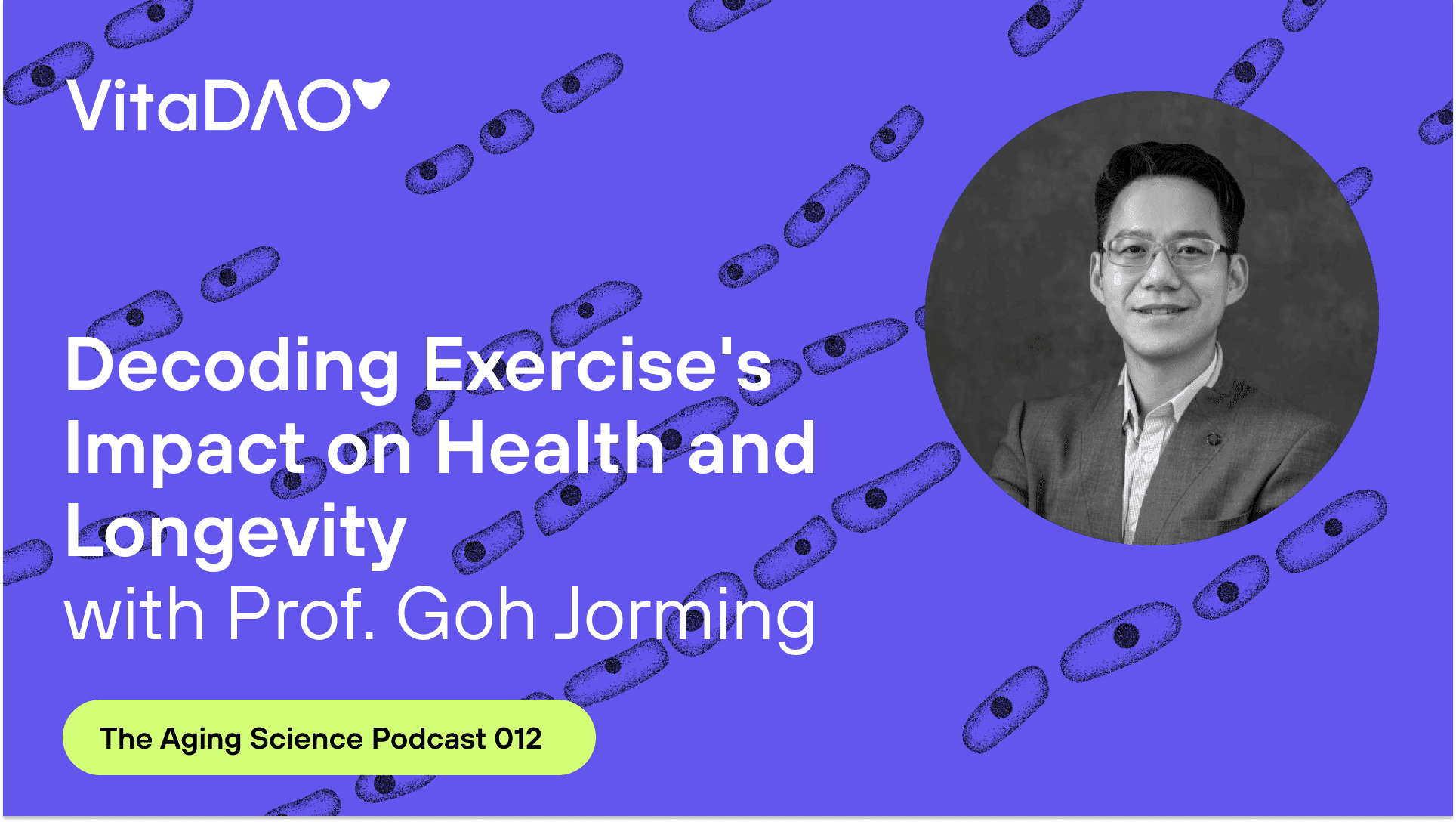
In this episode of the VitaDAO Aging Science Podcast I had the pleasure of talking to Prof. Goh Jorming from the National University of Singapore. We talked about the different kinds of exercise, inflammatory mediators of exercise benefits, mice in weighted vests and more.
Brief CV — Prof. Goh Jorming
Working at the at National University of Singapore (NUS) and the Centre for Healthy Longevity (CHL) Jorming investigates how exercise influences the immune system in health, aging, and disease. He is particularly interested in the role of Damage Associated Molecular Patterns (DAMPs), which are central players in disease-related inflammation and metabolic dysfunction. To address this area, his lab uses a combination of cardiopulmonary exercise testing (CPET), and other techniques to determine the effects of exercise on circulating biomarkers, energy expenditure, glucose tolerance, insulin sensitivity, and oxidative stress.
https://coe.nuhs.edu.sg/Centre-for-Healthy-Longevity/Pages/default.aspx
Twitter — @HealthyLongeviT
Instagram — @longevityminutes
Introduction to some important controversies
Like any field, the field of exercise physiology is not without its controversies.
Although I like to emphasize the shortcomings of the exercise data, I do nevertheless believe that exercise can improve quality of life and prevent premature mortality. While it may not be an anti-aging panacea, it is still one of our best available public health interventions. During the podcast we discussed this issue briefly as well, when I mentioned that the rapamycin data is much stronger than the exercise data, at least when the two were tested head to head in animal models.
For those who are interested in exploring these controversies from my perspective I recommend one of my recent blog posts as an introduction (1) and also this well-written review by Jorming as a “counterpoint” in support of the idea that exercise is an anti-aging intervention (Goh, Wong, Soh et al. 2021 https://febs.onlinelibrary.wiley.com/doi/10.1111/febs.16337).
As a geroscientist I wish that rapamycin research received as much funding and public acclaim as does exercise research. One of my goals is to convince other researchers of this. I think the combination of exercise and geroprotective drugs like rapamycin could be particularly fruitful. Now on to the brief shownotes.
What is the best kind of exercise?
In our discussion Jorming emphasized that different kinds of exercise have non-overlapping benefits and I totally agree. For example, aerobic exercise is best for improving cardiovascular health, i.e. the health of the heart and large blood vessels. Whereas resistance training improves bone density and strength, and could thereby prevent falls and fractures in the long term. We also talked about stretching. I pointed out that some people appear to be “hyper-responders” who get much more out of stretching or yoga than do others. Given these difficulties Jorming is quite interested in designing indiviudalized exercise programs to maximize the benefits for all participants.
Exercise and inflammation
Exercise triggers a complex set of physiological responses, among these modulation of inflammation has received a lot of attention. Moderate exercise is generally anti-inflammatory. It contributes to the release of myokines from skeletal muscles, such as HMGB1, which in turn inhibits the production of pro-inflammatory cytokines like Tumor Necrosis Factor-alpha (TNF-α).
Whether the benefits of exercise are linear with the amount of training or offer diminishing returns is still hotly debated. It may well be possible that running has a “U-shaped” effect on health, which means that moderate amounts are beneficial and vigorous amounts of running are less beneficial or even harmful. Although this may be true in some cases, it is unlikely to be relevant to the average person that is not getting enough exercise to begin with.
Moderate exercise is beneficial, whereas excessive or overly intense exercise without proper recovery can lead to chronic inflammation and increase the risk for injuries and other health issues (Gleeson et al., 2011). As far as acute risks are concerned, Jorming stresses that fears of sudden cardiac death are sensationalist reporting.
IL-6 is one of many molecules that are released during exercise. The umbrella term for such molecules is myokines (muscle-derived mediators) and exerkines (exercise-induced mediators). Another such myokine that we covered during the podcast is HMGB1, which is not just released during exercise but also during tissue injury where it can be considered a Damage-Associated Molecular Pattern (DAMP) molecule.
A naive interpretation would be that transient tissue damage and inflammation is beneficial in the context of exercise, whereas chronic, especially low-grade inflammation, drives aging. The reality is likely more complex but this may be a good approximation.
The comparison of HMGB1 and IL-6 is also quite interesting. Jor Ming mentions that during exercise IL-6 signals low substrate availability and glycogen depletion rather than tissue damage, which can be signalled by different myokines including HMGB1. It seems the circulating IL-6 under resting conditions is released from adipose tissue and that this chronic release is harmful.
Finally we also discussed whether we could recapitulate the benefits of exercise using pills and drugs (spoiler: the answer is no, at least not yet).
Does exercise work in mouse models?
Once again, we discussed the shortcomings of the mouse model in this podcast. Mice are one of our favourite models because they are affordable, not because they are perfect. Nevertheless we should take results in mice somewhat seriously because both mice and humans have a relatively recent common ancestor, making us genetically quite similar.
My personal opinion, after having read most of the literature, is that exercise does not consistently prolong the lifespan of mice, although it does seem to help rats to live longer, which is likely via weightloss.
Although exercise might not have a large impact on mouse lifespan, it nevertheless attenuates cancer progression (Eschke et al. 2019) and improves healthspan rodents (Garcia-Valles et al. 2013).
One limitation of the exercise literature is that lifespan studies always employ running wheels and never resistance training. It might well be that a combination of the two would have larger effects on lifespan. We discuss some alternatives to wheel running during the podcast and I hope more such studies will be conducted showing benefits of exercise in rodents.
The host — brief bio
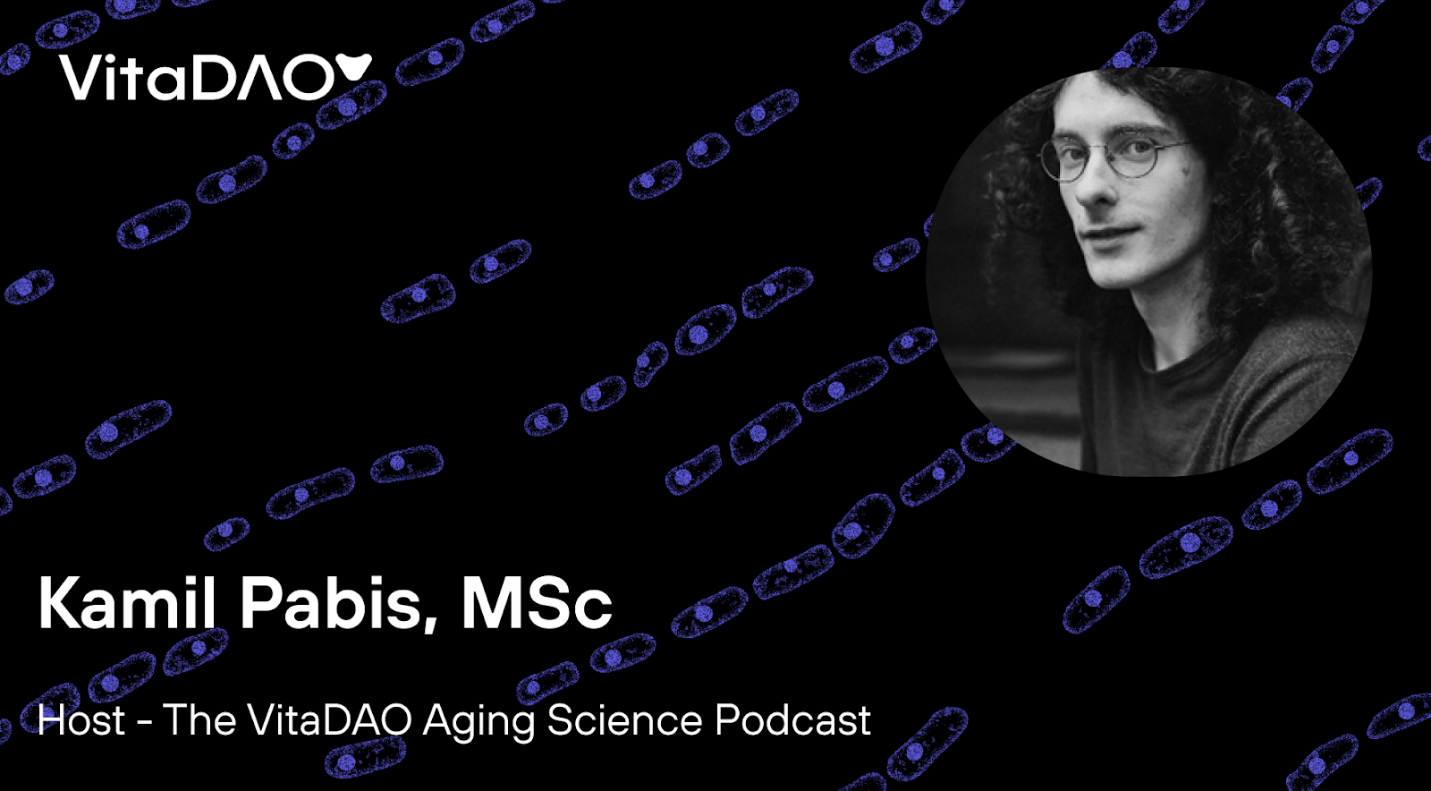
Kamil Pabis, MSc is an aging researcher and longevity advocate with several years of experience in the aging field that spans multiple countries. Among other projects, Kamil worked on long-lived dwarf mice in Austria, on mitochondrial disease and aging in the UK, and finally on the bioinformatics of aging in Germany and Singapore. Presently, he is involved in several projects related to science communication and translational aging research.
References and notes
Gleeson, M., Bishop, N. C., Stensel, D. J., Lindley, M. R., Mastana, S. S., & Nimmo, M. A. (2011). The anti-inflammatory effects of exercise: mechanisms and implications for the prevention and treatment of disease. Nature Reviews Immunology, 11(9), 607–615.
https://www.ncbi.nlm.nih.gov/pmc/articles/PMC10092579/
Eschke, Robert-Christopher Karl-Richard, et al. “Impact of physical exercise on growth and progression of cancer in rodents — a systematic review and meta-analysis.” Frontiers in oncology 9 (2019): 35.
Note: The exercise data is a potential counter argument to Dan Ehninger, whom I interved not long ago. He thinks anti-carcinogenic interventions extend mouse lifespan without slowing aging. Well, here we have an example of an anti carcinogenic intervention that does not extend mouse lifespan. Indeed, while exercise extends rat lifespan the data in mice is very close to null.
Goh, Jorming, et al. “Targeting the molecular & cellular pillars of human aging with exercise.” The FEBS Journal 290.3 (2023): 649–668.
https://febs.onlinelibrary.wiley.com/doi/10.1111/febs.16337
Garcia-Valles, Rebeca, et al. “Life-long spontaneous exercise does not prolong lifespan but improves health span in mice.” Longevity & healthspan 2 (2013): 1–12.