Welcome back Vitalians! We’re excited to share our monthly update on everything happening across the VitaDAO ecosystem and the wider longevity community.
The VitaDAO team has been hard at work across three key focus areas, which we are excited to share with you. Let’s start from these.
Vita App
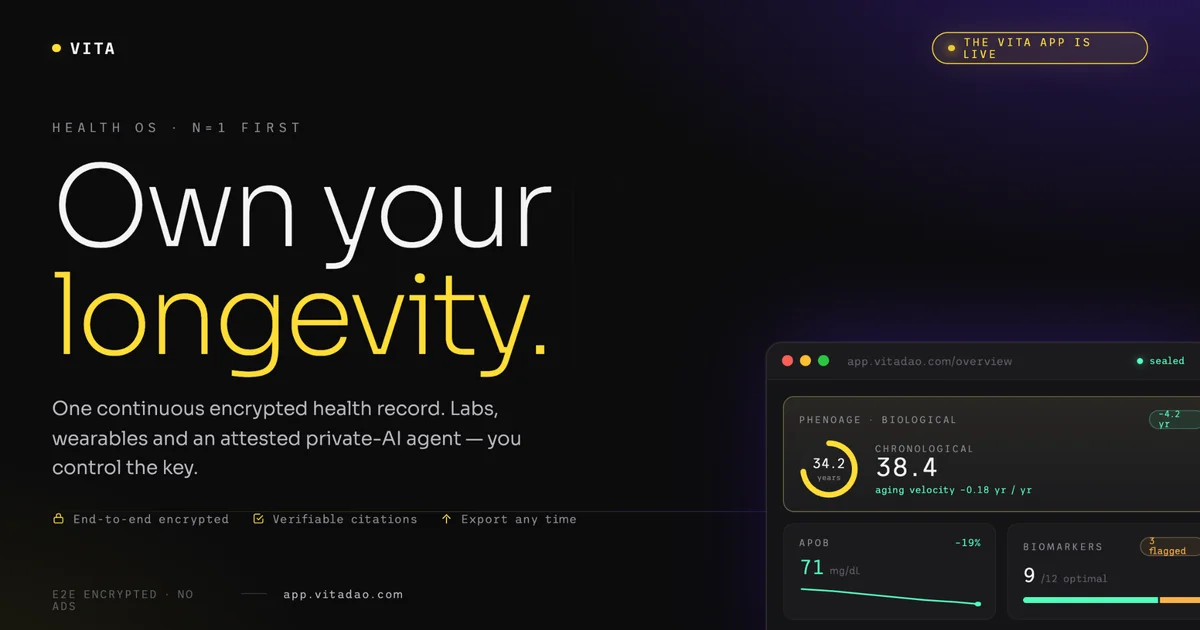
Vita App is live! Bring your wearable data and blood test results into one place, follow changes over time, and explore the research behind your results.
Three things stand between you and real control of your own healthspan:
- Your data is scattered, and stays that way. Wearable in one app, blood panels in a lab portal, consultation reports buried in an email thread, and a spreadsheet you stopped updating in March. Nothing is ever assembled into one picture, so the trends that matter most — the slow ones, visible only across quarters — stay invisible.
- Consolidating it means giving it away. Bringing your health records together should come with clear answers about who can access them, how they are used and how you can take them with you . You can change a leaked password. You can't change your medical history.
- And having the data isn't the same as understanding it. Reading a full panel against the current literature is a specialist skill — scarce, expensive, and rationed into a fifteen-minute annual appointment or a longevity clinic costing thousands a year. Most people never get it at all.
Vita is built to break through all three barriers and enable you to take charge of your own health!
- Wearable data meets blood work reports: Connect Oura, WHOOP or Withings (more to come!) and Vita reads your recovery, sleep and vitals automatically. Upload a blood panel and it parses it. Everything lands in a single longitudinal record, which serves as the basis for your health profile.
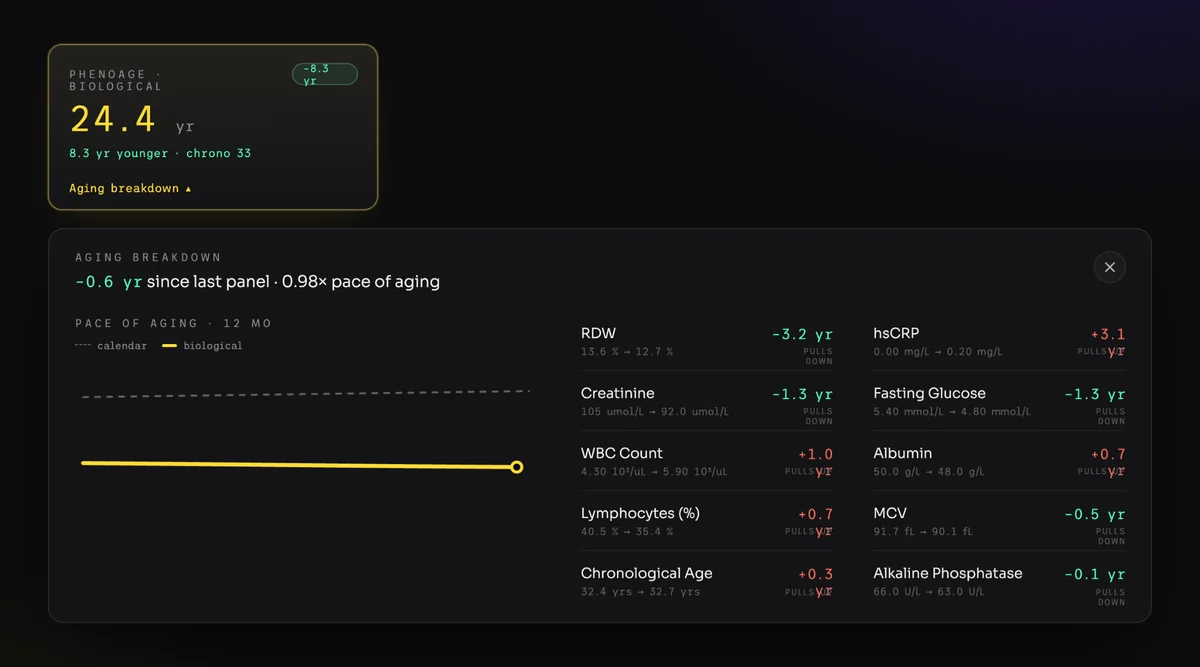
- Track your PhenoAge estimate over time: Vita uses nine blood biomarkers and your chronological age to calculate PhenoAge. As you add new blood results, you can see how the estimate and its contributing biomarkers change. A change in the score does not, on its own, establish that ageing has slowed or reversed
- Truly Yours: your data is end-to-end encrypted before it leaves your device, and you hold the key. It is never used to train models, and you can export all of it at any time. We built it this way because health data is the one category where "trust us" isn't good enough.
- Explore the research behind your results: Ask VitaAI about changes in your biomarkers and read the supporting sources. Powered by Aubrai, it brings relevant longevity research into the context of your health record and helps you prepare questions for your clinician
- For VITA tokenholders: Stake 5,000+ VITA to unlock discounted pricing. The discount grows with both your stake size and your staking streak - hold longer, pay less.
Launch Vita → · Explore Vita App (or go to vitadao.com and hit "Launch app")
Experimental Longevity Drug Survey
Recent reforms in Montana and the Bahamas let people access experimental drugs years ahead of full approval, provided the candidate has completed Phase 1 and cleared an Experimental Treatment Review Board or equivalent. For longevity therapeutics this opens a route that did not exist a year ago.
Yet nobody knows who would use it, under what safeguards, and at what price. So we are running a short survey to find out, in partnership with LARTA and Wildcreek Life Sciences. Answering takes 10-15 minutes, we publish only anonymized aggregate results, and your responses will directly inform how VitaDAO and the whole longevity community think about these early access programmes.

You can access the survey here.
AubrAI
When you’re working with unpublished results or developing a new hypothesis, you need to know where your data goes. Aubrai’s Private mode encrypts your conversation content, uploaded files and saved research when stored, with a recovery key you keep. AI requests are processed through Tinfoil’s protected computing environment. Literature searches still send search terms to external services, so sensitive details should stay out of those queries.
Learning a new research tool also means knowing what its results can tell you. Aubrai Academy offers practical walkthroughs for analysing data, checking sources and using NVIDIA BioNeMo tools to predict protein structures, design candidate proteins, and generate and dock small molecules.
VitaDAO Portfolio Highlights
Now let's check out what's been happening in VitaDAO's portfolio this month!
To date we have funded more than 30 projects. We are always looking out for more ground-breaking longevity drug discovery science to support, so email us at discovery@vitadao.com if you have, or know any researchers with, a great translational idea in need of funding!
Humanity has partnered with Quest Diagnostics to offer a $29 biological-age add-on to selected blood tests in the US, using routine biomarkers to estimate how a person’s body is ageing relative to their chronological age. The model was developed with Imperial College London and trained on data from more than 300,000 UK Biobank participants, although it is intended as a wellness tool rather than a diagnostic test.
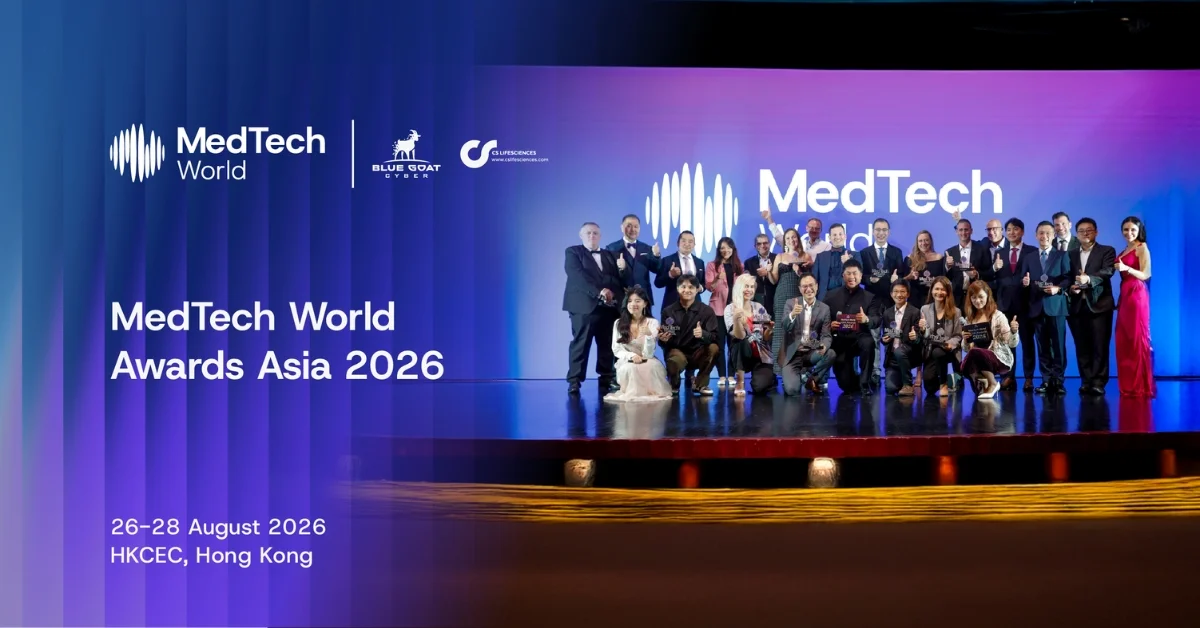
Gero won the Aging & Longevity Innovation Award at the 2026 MedTech World Asia Awards in Hong Kong, recognising its work applying AI and advanced data science to ageing biology. The award was decided through a combination of public voting and expert judging.
Remedium Bio has raised a $10 million Series A led by Lifespan Vision Ventures, with participation from Eli Lilly and HKX Capital, to advance its long-lasting protein therapeutics toward first-in-human trials. The company aims to use fat cells (adipocytes) as “protein factories” that could provide adjustable therapeutic protein production for years after a simple subcutaneous treatment.
VitaDAO previously funded Prof. Evandro Fang to discover novel mitophagy activators, and his group has now published new work with Insilico Medicine identifying Alzheimer’s targets linked to the NAD⁺–mitophagy axis. The study, which lists VitaDAO as a funder, combined AI analysis of human brain data with experimental validation to identify several genes that may protect against neurodegeneration. Check out Insilico Medicine’s announcement here.

Jack Scannell, CEO of Etheros Pharmaceuticals Corp., co-authored a Nature Reviews Drug Discovery perspective, “Artificial intelligence in drug discovery — what it is, where we stand and the path forward”.
News and Media
We will now shift gears to highlight what has been happening in the wider longevity ecosystem.
20 Healthspan Finalist Teams Advance in the Race to Extend Healthy Aging
XPRIZE Healthspan has named 20 finalist teams in its $101 million competition to develop treatments that restore muscle, cognitive and immune function in older adults, with 10 teams receiving $1 million each to advance into clinical testing. The finalists span drugs, gene and stem-cell therapies, extracellular vesicles and AI-guided approaches, with trials running through 2029 and up to $81 million in final prizes to be awarded in 2030.
Oura faces lawsuit accusing it of misleading consumers about sleep-tracking accuracy
Oura is facing a proposed class action lawsuit alleging that its smart rings overstate the accuracy of their sleep-stage tracking, which relies on physiological signals and algorithms rather than direct brain measurements. Oura disputes the claims, pointing to peer-reviewed studies comparing its sleep staging favourably with polysomnography, while stressing that the ring is not a medical device.
Substances Generally Recognized as Safe (Proposed Rule)
The FDA has proposed tightening oversight of food ingredients classified as “generally recognized as safe” (GRAS), which companies can currently self-designate without notifying the agency. Under the new rule, manufacturers would have to submit safety notices for certain ingredients, giving the FDA more information to identify potentially unsafe substances and scrutinise the scientific basis for GRAS claims.
Live Your Longest, Healthiest Life from Lifespan
David Sinclair has launched Lifespan, a new longevity-focused media, community and research platform featuring a magazine and show aimed at making ageing science accessible to the public. Membership also helps fund longevity research through the Lifespan Foundation, including support for early-career scientists and clinical trials.
Have the benefits of intermittent fasting been overhyped?
Intermittent fasting can help with weight loss and improve some metabolic markers, but human studies suggest it is generally no better than simply reducing calories. Many of the more dramatic longevity benefits come from animal studies, so whether fasting itself meaningfully extends healthy lifespan in humans remains unclear.

Why Aging May Be a Program, Not a Breakdown
Research from Junyue Cao’s lab suggests ageing may unfold in distinct, coordinated stages rather than simply through the gradual accumulation of random damage. By analysing millions of cells across the mouse lifespan, the team found age-related shifts in specific cell populations and gene-regulatory programmes, raising the possibility that parts of ageing could eventually be targeted or reprogrammed.
The American billionaires trying to cheat death
A growing group of US tech billionaires, including Jeff Bezos, Sam Altman and Peter Thiel, are investing heavily in companies trying to slow, reverse or better understand ageing. The surge of private capital is accelerating longevity research, but also raises questions about how effective future therapies will be and who will be able to afford them.
Shinya Yamanaka Made Cells Young Again. Can That Reverse Aging?
Nobel laureate Shinya Yamanaka’s discovery that adult cells can be reprogrammed to a youthful, stem-cell-like state is now moving into the clinic, with iPS-cell therapies conditionally approved in Japan for Parkinson’s disease and heart failure. Researchers are also testing whether partial reprogramming can rejuvenate ageing cells without erasing their identity, although safety and cancer risks remain major hurdles
Short, Intense Exercise Elicits Beneficial Metabolic Changes
A study found that just a few short bursts of high-intensity exercise triggered much larger changes in circulating proteins and metabolites than 90 minutes of moderate exercise. Many of these molecules were linked to better cardiometabolic health and younger age, suggesting exercise intensity may be an important driver of its systemic benefits.
Insilico advances virtual cell research
Insilico Medicine has unveiled a Virtual Aging Cell platform that uses multiple AI agents to simulate how cells change during ageing, differentiation and reprogramming. The company hopes these virtual models could help researchers identify ageing-related drug targets and predict interventions that alter cell fate before testing them experimentally.

Tweets of the Month
Karl Pfleger discusses 3 things people in the aging field should stop saying, and why!
Alan Tomusiak maps out the different ageing theories in a two-axis matrix that categorises theories of ageing according to whether they propose a single molecular cause versus multiple interacting causes, and whether ageing is viewed as primarily entropic or evolutionarily driven. This resulted in an essay on the topic by Peter Fedichev: There Is No Landscape of Aging Theories - There Are Three Different Questions: a comment on Alan Tomusiak’s “The Great Landscape of Aging Theories”.
A fun fact from Charles Brenner:
“cold water fish need fats to be more fluid than mammals functioning at 37 deg
fish get PUFA by eating algae--we get algal PUFA by eating fish
we can't make good phosphatidylcholine (PC) wo PUFA
we can't make quality VLDL wo good PC
skeletal muscle can't function optimally between meals wo VLDL”.
Nir Barzilai: I have always wished to make the knowledge I've accumulated over the years accessible to as many as possible. Here's a step towards that. Using all of my papers, interviews, presentations, etc. Delphi has created an avatar of me that anyone can chat with: delphi.ai/nir-barzilai.
Preprint Corner - in collaboration with

The Longevist is a preprint overlay journal spotlighting the most promising longevity research. The journal is currently paused as we build an automated curation agent - the Longevist AI Agent (LAIA). To stay updated, sign up to our newsletter and follow us on X.
NAMPT activation uncovers a senescence-specific vulnerability and promotes healthy aging in combination with NAM
Researchers found that boosting NAD+ production can selectively weaken senescent “aged” cells, which accumulate with age and contribute to inflammation. In old mice, combining a NAMPT-activating drug with nicotinamide supplementation increased tissue NAD+, reduced some signs of senescence and inflammation, and helped preserve physical performance.
Published Literature Hot picks
Human brain organoids record the passage of time over multiple years
Scientists kept human brain organoids alive for five years and found that they continued to mature and age in ways that closely mirrored the developing human brain. Remarkably, their cells appeared to retain a biological “memory” of how long they had spent in culture, suggesting these organoids could model much later stages of human brain development than previously possible.

Late-life semaglutide treatment slows ageing and extends lifespan in female mice
Semaglutide extended lifespan in female mice when treatment began at 20 months of age. In a separate experiment, it matched several functional benefits of calorie restriction and exceeded it on some measures. The lifespan experiment did not include a calorie-restricted comparison group, so it does not establish that the survival benefit was independent of reduced food intake. Whether these findings translate to human longevity remains unknown.
Integration of proteomic aging clocks in a phase 2a clinical trial supports simultaneous geroprotective assessment
In an exploratory analysis of a 12-week phase 2a trial in people with idiopathic pulmonary fibrosis, six proteomic clocks estimated lower biological age in the rentosertib treatment groups. The findings support further study of ageing biomarkers in disease trials, but cannot establish whether the clock changes reflect an effect on ageing itself or changes related to lung disease.
Responsiveness of epigenetic aging biomarkers to longevity interventions in humans
Across 51 intervention studies, researchers compared 16 epigenetic clocks and found that clocks trained on mortality risk or the pace of ageing tended to respond more strongly to the interventions studied. The results could help researchers select biomarkers for future trials. Further validation is needed to establish whether treatment-related clock changes predict meaningful health benefits. This paper also received some interesting discourse on X and a news & views article in Nature Medicine.
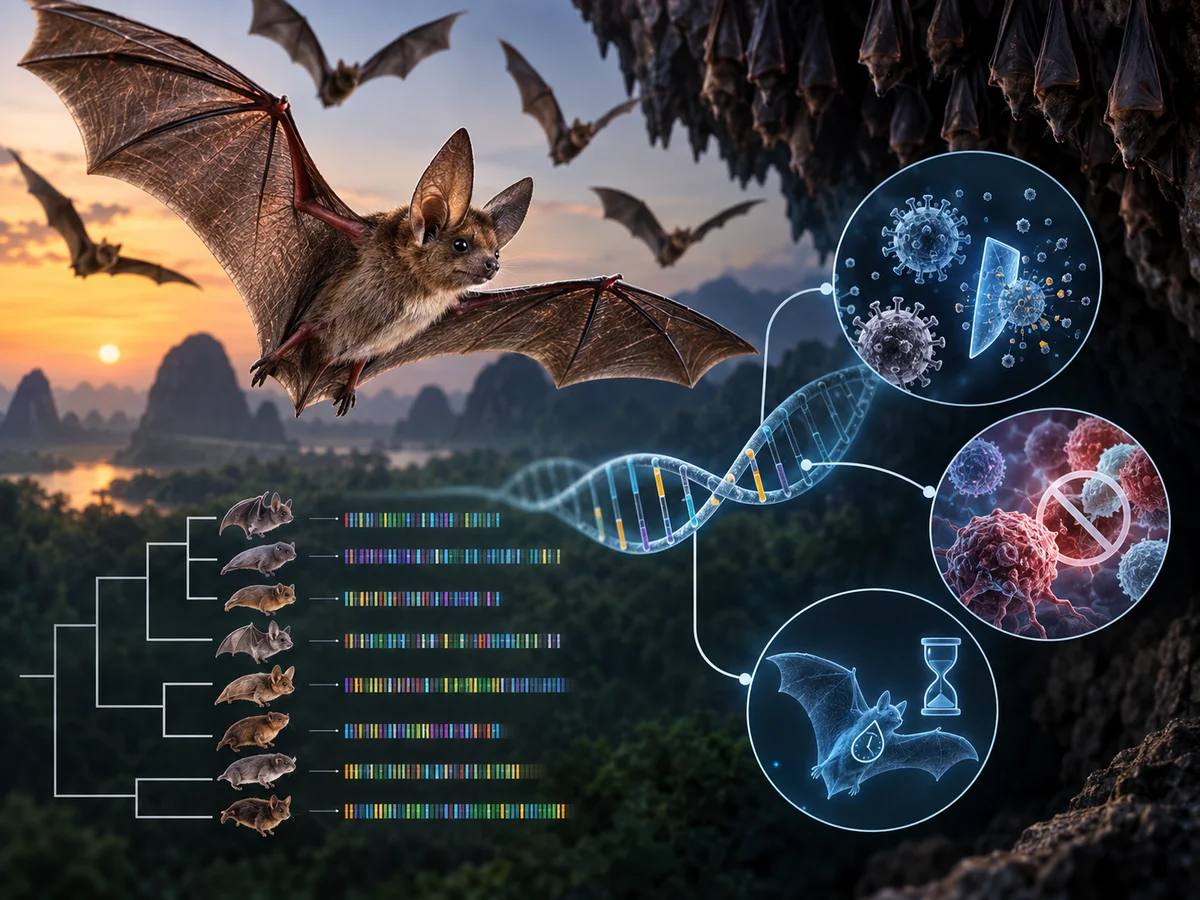
Insights into longevity and virus-driven adaptation from Myotis bat genomes
By comparing the genomes and cells of eight closely related bat species, researchers identified genetic adaptations linked to their unusually long lifespans, cancer resistance and exceptional ability to tolerate viruses. The findings suggest that some of the same evolutionary changes that strengthened bats’ antiviral defences may also help protect them from age-related disease.
Histological aging signatures for monitoring tissue-specific aging and disease
Using 25,712 tissue images from 983 people, researchers developed AI models that estimate tissue-specific biological age from microscopic structure. They also developed blood-based predictors of tissue age gaps and found associations with diseases including Alzheimer’s, stroke and Crohn’s disease.
Published Literature Reviews, Comments, Perspectives and more
Anti-aging interventions need less hype and more clinical evidence
Despite growing enthusiasm for anti-ageing treatments such as NAD+ supplements and injectable peptides, strong evidence that they improve human health or slow ageing is still lacking. The field therefore urgently needs reliable biological-ageing biomarkers and rigorous clinical trials to distinguish genuinely effective therapies from unproven longevity claims.

Aging's competing paradigms: Another decade of investigation into damage-driven versus programmed theories
Researchers revisit a major debate in ageing biology: whether ageing is mainly caused by the gradual accumulation of cellular damage or by an evolved genetic programme. Distinguishing between these models could change how scientists design therapies to extend healthy lifespan.
Immune surveillance and immune evasion of senescent cells
Senescent cells are normally recognised and cleared by the immune system, but this process becomes less effective with ageing and cancer, allowing these dysfunctional cells to accumulate and damage tissues. Boosting immune surveillance of senescent cells could therefore offer a new way to treat age-related diseases and cancer.

Obesity accelerates aging: Mechanisms and therapeutic implications
Obesity and ageing share many of the same biological changes, including chronic inflammation, mitochondrial dysfunction and telomere shortening, and obesity may accelerate these processes. This raises the possibility that anti-obesity treatments could also help slow aspects of ageing and reduce age-related disease.
A consensus roadmap from the SENESCENCE2030 network towards precision senescence medicine
At an international senescence meeting, experts laid out a roadmap for turning discoveries about senescent cells into real treatments. Priorities include better ways to classify and measure senescent cells, more personalised therapies, clearer regulatory pathways and stronger collaboration between academia, industry and policymakers.
Embracing non-linearity in human ageing
Rather than declining at a constant rate, ageing may occur through a series of biological transitions at different stages of life. Identifying these turning points could reveal specific windows when anti-ageing interventions are most likely to be effective.

Outro
We hope you enjoyed this month’s update on the latest happenings at VitaDAO and across the wider community. Stay tuned for more on what we’ve been working on in next month’s edition.
Further Reading
For the longevity aficionados, here is some additional material for you to enjoy:
- Selective targeting of cancer and senescence via shared metabolic shifts extends lifespan of old mice
- The microbiome in human skin aging
- The hallmarks of skeletal muscle health
- Long-lasting extracellular matrix modifications reshape intestinal stem cell fate and promote chronic inflammation
- CD38-activated macrophages drive age-related placental senescence by depleting NAD+ in decidual stromal cells
- Characterizing the SASP-Dependent Paracrine Spreading of Senescence Between Human Brain Cell Types
- Positioning TERT at the apex of aging
- Valine Restriction Increases Male Mouse Lifespan by 23%
- CD4 CTLs in supercentenarians: Signs of adaptive expansion in healthy aging
- Senomorphic agents: Multi-target strategies to tame the senescence-associated secretory phenotype for healthy ageing
- Why studying females reveals more about aging: The reproductive resilience hypothesis for the evolution of sex-specific aging
- Senotypes define the diverse landscape of senescent cells
- Novo Nordisk's Ziltivekimab Fails to Reduce Cardiovascular Events in Phase 3 ZEUS Trial